Pope, or baby food? Italian keeps you on your toes early
Papa is the pope. Pappa is baby food. Same letters, same vowels, and the only difference between “the Holy Father” and “mushy dinner” is how long you hold the middle consonant. Italian is full of pairs like this: sono (I am) and sonno (sleep), casa (house) and cassa (cash register). Once you notice them they stop being a trap and start being fun. You can hear the difference, and you can try it and get it wrong a few times, which feels like a relief if you've ever struggled through a language that punished every guess.
If another Romance language put you off
Many people arrive at Italian after bouncing off a language where spelling and sound drifted apart. Italian mostly skips that problem. Learn a handful of rules, like how c softens before e and i, or how gli has its own sound, and you can read a new word out loud correctly. It's a real head start, and also a slightly misleading one, because sounding right comes before knowing why. That's a good reason to speak from day one: your ear and mouth get ahead of your grammar instead of waiting for it.
Practise by talking
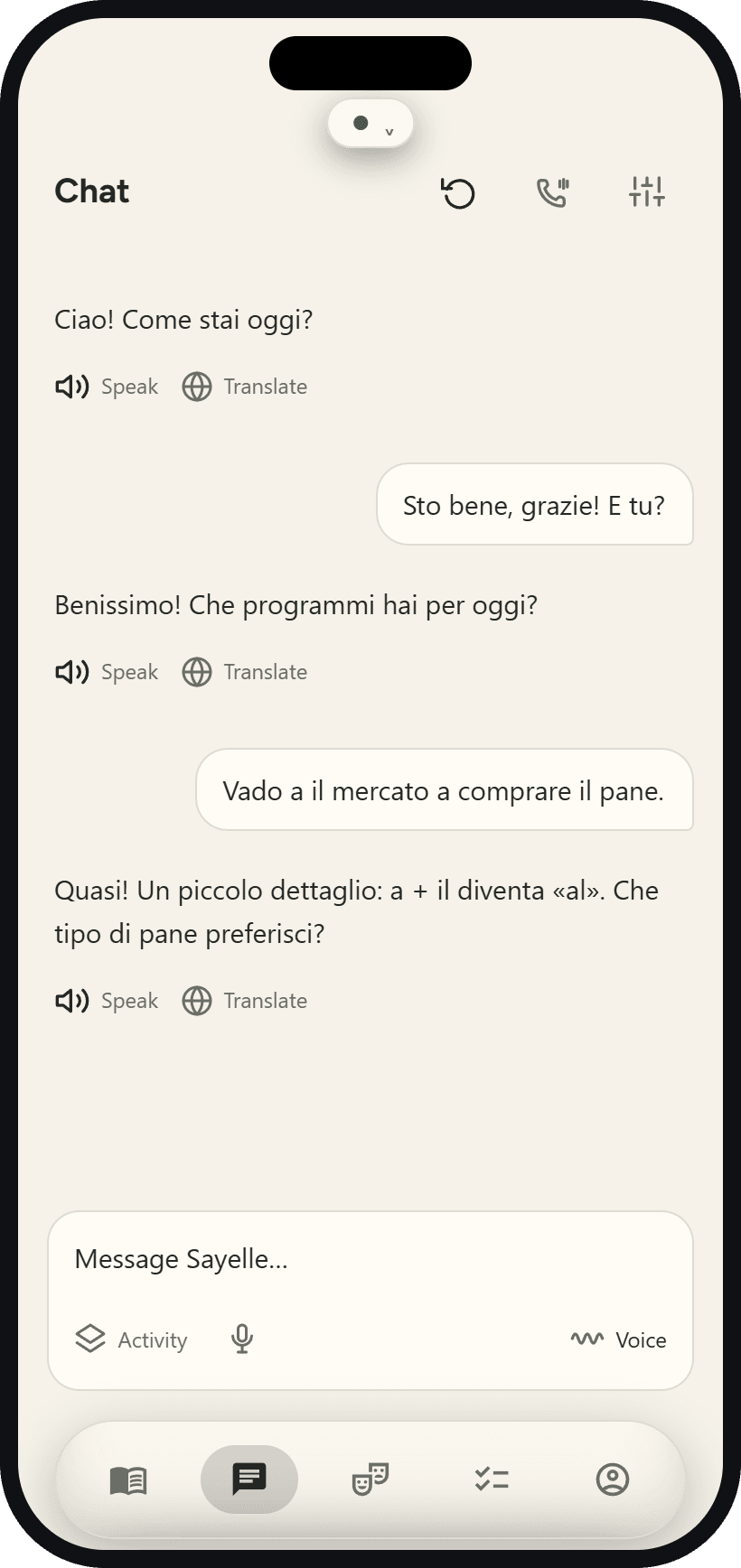
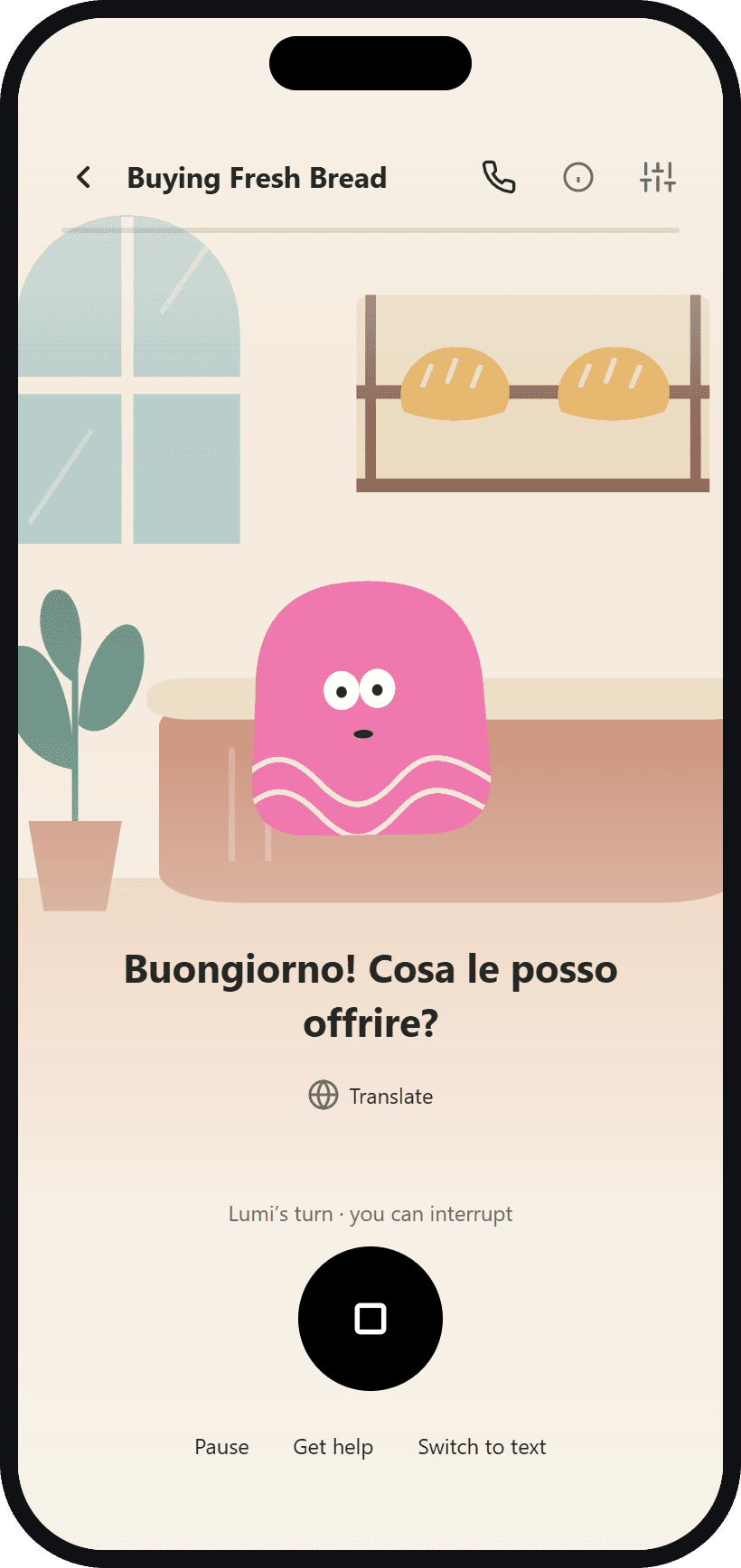
In Sayelle you speak or type to a tutor that answers in Italian, the way a patient local would. It doesn't flag you in red for a wrong answer, it just replies. Scenarios put you in a situation with no script, like ordering a cornetto at a bar. Lessons teach grammar through conversation, and Study turns your past chats into flashcards and listening practice.
What you'll learn
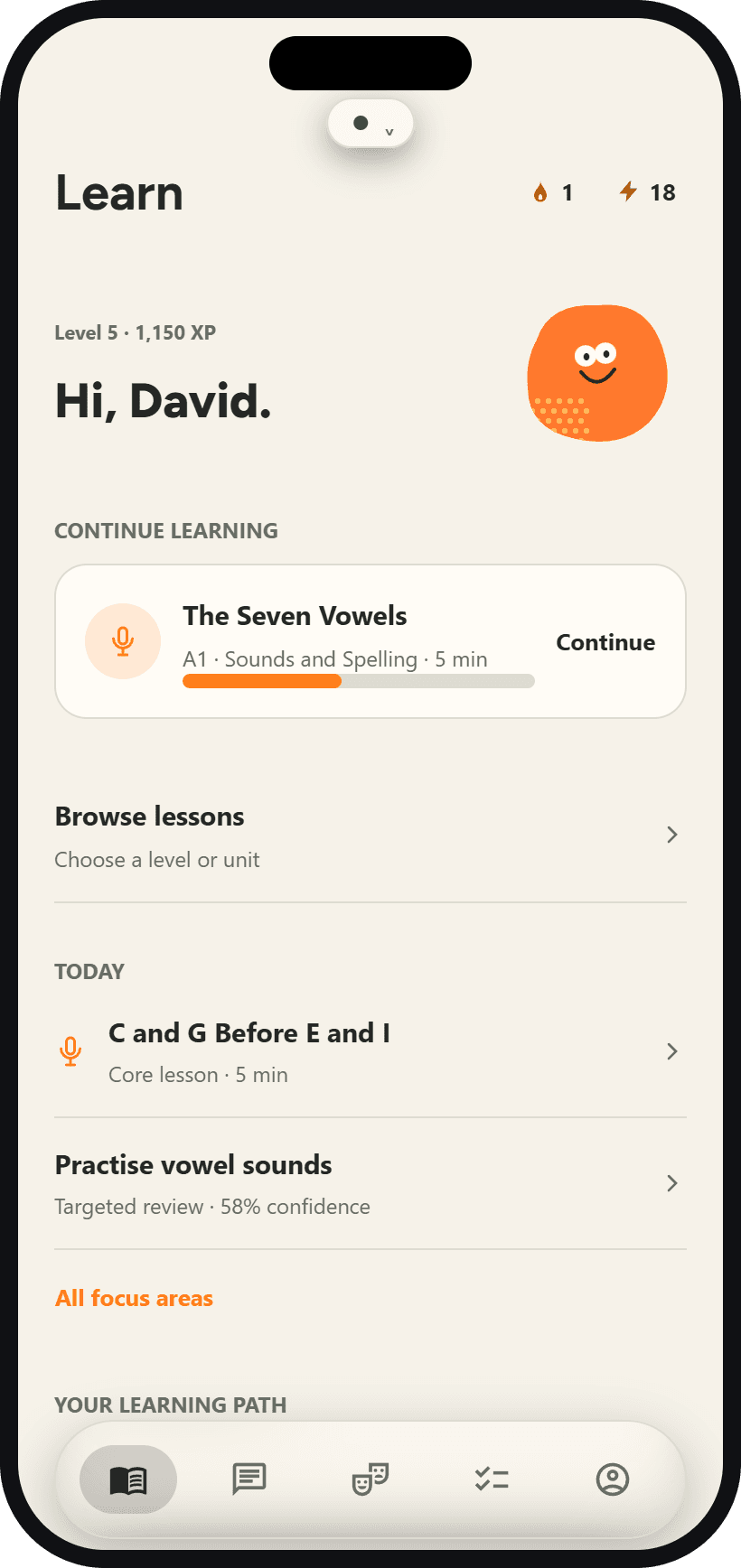
There are more than 190 lessons, starting from zero, with more on the way. The units cover:
- Sounds and spelling, including double consonants
- Greetings and first conversations
- Nouns, gender and number, prepositions and articulated forms
- Numbers, time and dates
- Essere, avere and the present tense
- Food, home and city life
- Reflexive verbs, direct and indirect object pronouns, ne and ci
- The passato prossimo, the imperfetto, and when to use which
- The future, comparatives and commands
Practise on the train
The tutor, speech recognition and voice models download once over Wi-Fi (about 4 GB), then run on your phone. A full spoken conversation works with no signal, and your raw microphone audio never leaves the device. You'll need iOS 18 or later, or Android 8.0 or later. Read more about how the offline AI works and what phone you need.
Common questions
Do I need to know any Italian first?
No. The course starts with the sounds and spelling of Italian and builds from there.
Does it help with double consonants?
Yes, and speaking is the best practice for them. Because you say everything out loud and the tutor answers, you hear the difference between pairs like papa and pappa, or sono and sonno, and try them yourself.
Does it cover the passato prossimo and the imperfetto?
Yes. There are separate units on the passato prossimo with avere and with essere, on the imperfetto, and on when to use which.
Does it work offline?
Yes. After a one-time download of about 4 GB, the tutor, speech recognition and voice all run on your phone. Signing in, purchases, syncing and new content downloads still need a connection.
Is it free?
Free to start. Conversations with your tutor are free and unlimited. Lessons and scenarios use practice energy that recharges over time, and Sayelle Plus is an optional subscription that removes that limit and unlocks more content.
Start with your first sounds
Sayelle is free to start. See the other eight languages it teaches, or download it now.